Dry Needling vs. Acupuncture in Tennessee: What Differs
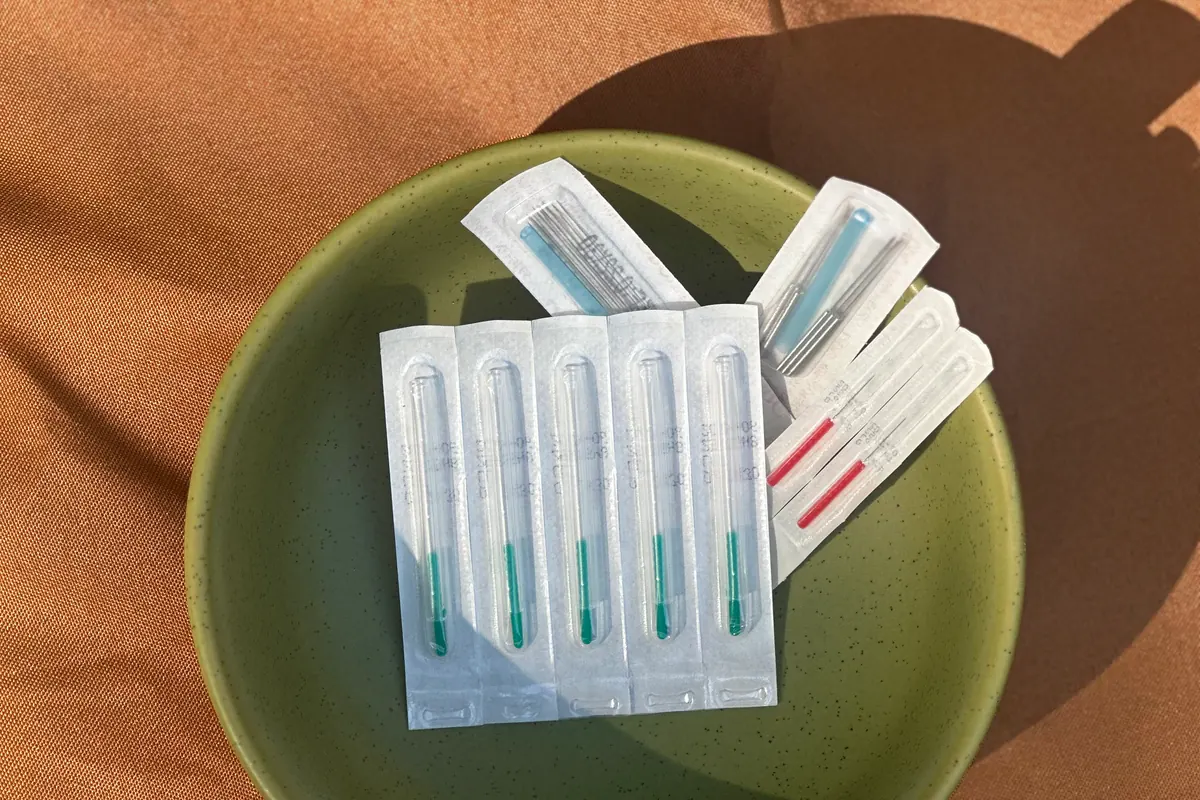
If a physical therapist has offered you dry needling, and you have also seen acupuncture advertised nearby, the two can look like the same thing described in different words. Both involve thin needles inserted through the skin. Both are commonly sought for musculoskeletal complaints. In Tennessee, though, they sit under different licensing systems, require different education, and are regulated by different boards.
This is a plain comparison of those differences. Neither practice is described here as superior. They are separate services with separate rules, and which one makes sense depends on what a person is looking for.
What dry needling is
Dry needling is a technique performed by a physical therapist in which a thin needle is inserted into muscle tissue, commonly at points a therapist identifies during examination. In Tennessee, the practice is governed by a rule of the Board of Physical Therapy, which requires that patients receiving dry needling be given information from the physical therapist that includes "a definition and description of the practice of dry needling" and "a description of the risks, benefits, and potential side effects of dry needling" (Tenn. Comp. R. & Regs. 1150-01-.22).
Dry needling is typically one component of a broader physical therapy plan that may also include exercise, manual work, and progressive loading.
What acupuncture is
Acupuncture, as the National Center for Complementary and Integrative Health describes it, "is a technique in which practitioners insert fine needles into the skin," and the needles "may be manipulated manually or stimulated with small electrical currents (electroacupuncture)" (NCCIH). National survey data cited by NCCIH indicate that in the United States acupuncture "is most commonly used for pain, such as back, joint, or neck pain" (NCCIH).
A licensed acupuncturist works from a diagnostic framework drawn from Chinese medicine, and point selection is often not limited to the area a person came in about. A visit may also include adjunct methods such as cupping, gua sha, or auricular needling.
The training each requires in Tennessee
This is where the two diverge most concretely. The numbers below come from the current Tennessee administrative rules for each profession.
For a physical therapist performing dry needling
Tennessee's rule requires a physical therapist to obtain 74 hours of instruction across two categories before performing dry needling. The first is 50 hours covering the musculoskeletal and neuromuscular systems, the anatomical basis of pain mechanisms, trigger points, and universal precautions. The rule itself notes these are "generally satisfied during the normal course of study in physical therapy school," so for most therapists this portion is already complete. The second is 24 hours of dry needling specific instruction covering technique, indications and contraindications, documentation, management of adverse effects, practical psychomotor competency, and the OSHA bloodborne pathogens protocol. That 24-hour block is the coursework a practicing physical therapist typically adds. The rule states that "all such educational instruction must be obtained in person and may not be obtained online or through video conferencing," and each course must be approved by the Board or its consultant (Tenn. Comp. R. & Regs. 1150-01-.22).
The same rule adds two limits worth knowing as a patient. A newly licensed physical therapist "shall not practice dry needling for at least one (1) year from the date of initial licensure" unless the required training was completed before licensure. And "dry needling may only be performed by a licensed physical therapist and may not be delegated to a physical therapist assistant or support personnel" (Tenn. Comp. R. & Regs. 1150-01-.22).
This training sits on top of a physical therapist's doctoral-level physical therapy education and state license. It is additional coursework in one technique, not the whole of a physical therapist's preparation.
For a licensed acupuncturist
An applicant for acupuncture certification in Tennessee must have "proof of completion of a three (3) year post-secondary acupuncture training program or college acupuncture program sent directly from the training program or college" to the board's administrative office, and that program must either hold ACAOM accreditation, be in ACAOM candidacy status, or meet ACAOM standards. The applicant must also have proof of "current diplomate status in acupuncture" sent directly from the NCCAOM, and proof of a "clean needle technique course" sent directly from the course provider (Tenn. Comp. R. & Regs. 0880-12-.04). Applicants certified in another state may instead qualify by reciprocity under the same rule.
The practical difference is one of scope rather than merit. Dry needling coursework qualifies a physical therapist in a single needling technique within physical therapy. Acupuncture licensure requires a multi-year graduate program in acupuncture and Chinese medicine and national board certification, and the needling is the profession rather than one tool inside it.
Who regulates whom
Acupuncturists in Tennessee are credentialed under the Department of Health through the Advisory Committee for Acupuncture, which administers the certification process described above and requires that educational and NCCAOM documentation be sent to it directly rather than by the applicant (Tennessee Department of Health, Advisory Committee for Acupuncture).
Physical therapists are licensed and disciplined by the Tennessee Board of Physical Therapy, which "is responsible for safeguarding the health, safety, and welfare of Tennesseans, by requiring that all who practice physical therapy within the state be qualified to practice" (Tennessee Board of Physical Therapy). Dry needling is authorized and conditioned by that board's rule, not by the acupuncture board.
So a complaint, a records request, or a question about credentials goes to a different agency depending on which practitioner you saw.
What to expect in each setting
In a physical therapy clinic, dry needling usually appears inside a longer visit organized around movement. There is an examination, needling of specific muscles, and typically exercise or manual work in the same session. Follow-up is often tied to a course of physical therapy with functional goals and re-assessment.
In an acupuncture clinic, the visit is built around the needling itself. At Meridian, return visits run 30 to 45 minutes in The Meridian Room, a shared quiet space, and a practitioner may use points away from the area you came in about. Sessions are usually quiet and still, and people commonly rest with needles in place for part of the visit. If you want the specifics of what a first visit involves, what actually happens at a first acupuncture appointment walks through it step by step.
Cost and payment also work differently. Physical therapy is frequently billed to insurance; acupuncture in Tennessee is commonly self-pay. How coverage works for acupuncture in Tennessee covers the Medicare and commercial-plan details.
They are not interchangeable
The two practices share a tool and little else in the way of framework, training pathway, or regulatory oversight. A physical therapist offering dry needling is not offering acupuncture, and a licensed acupuncturist is not offering physical therapy. Either may be a reasonable place to start, and some people use both alongside each other with the knowledge of both providers.
Questions worth asking whoever you see: what training do you have in this specific technique, how many needles do you typically use and where, what should I expect afterward, and how will we decide whether to continue. Both professions should be able to answer directly.
If you are considering acupuncture
You can see the full list of what our licensed acupuncturists offer on our services and pricing page, including acupuncture, electroacupuncture, cupping, gua sha, and auricular acupuncture. Booking is available online, or you can call Brentwood at (615) 557-9293 or Murfreesboro at (615) 557-9294 with questions before you schedule. If you are currently in physical therapy, it is worth telling both providers what the other is doing.
This article is educational information only and is not medical advice. Individual circumstances vary. Consult a licensed provider about your own situation.
Sources
Tenn. Comp. R. & Regs. 1150-01-.22 (dry needling by physical therapists): https://www.law.cornell.edu/regulations/tennessee/Tenn-Comp-R-Regs-1150-01-.22
Tenn. Comp. R. & Regs. 0880-12-.04 (acupuncture certification process): https://www.law.cornell.edu/regulations/tennessee/Tenn-Comp-R-Regs-0880-12-.04
Tennessee Department of Health, Advisory Committee for Acupuncture: https://www.tn.gov/health/licensure/acp.html
Tennessee Department of Health, Board of Physical Therapy: https://www.tn.gov/health/licensure/pt.html
NCCIH, Acupuncture: What You Need To Know: https://www.nccih.nih.gov/health/acupuncture-what-you-need-to-know
NCCIH, Acupuncture: Effectiveness and Safety: https://www.nccih.nih.gov/health/acupuncture-effectiveness-and-safety
M. Rachelle Poffenberger, MSOM, L.Ac.
Tennessee license TN362. Practicing since 2009. Sees patients in Brentwood and Murfreesboro. Team and credentials